









Forgot your password?
Member benefits:
Updating a room with paint is an effective DIY job that isn't hard work, but can take time. Thoroughly preparing the surfaces is the key to a professional finish.
Preparing a standard room with baseboards, door frames and window in fairly good condition can take a day for cleaning, repairing and sanding.
Painting an average-sized 14-ft. x 18-ft. room takes at least four hours for one coat. Factor in up to two days for a full job, including drying time.
Consider which surfaces are to be painted and how much wear they'll get, which determines the type of paint you need to buy.
For volume, measure each wall, multiplying the height by the width for a total in square meters. A quart of paint covers up to 180 square feet for one coat. You'll need about two 1-gallon cans for the walls of an average room.
Modern paints tend to be formulated for specific areas, with five levels of sheen that affect the finish.
Choose the best brush for the best result to save time and effort. Quality synthetic brushes are good all-rounders, but choose natural bristles for solvent-based paint, especially enamel.
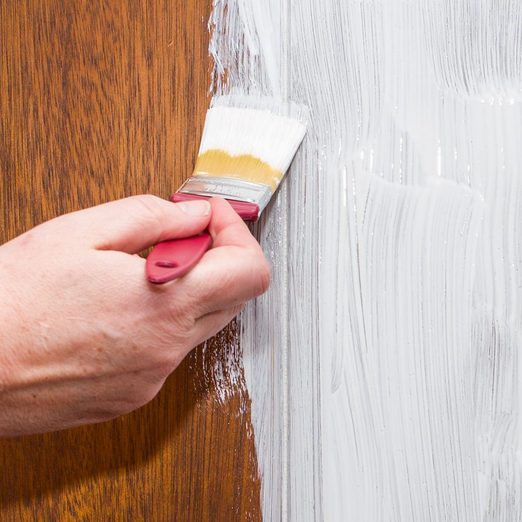
Hold the handle between the thumb and first finger, resting the fingertips at the top of the handle.
Dip the brush in the paint so it reaches halfway up the bristles; then, wipe it on the side of the can to remove the excess. Use short, even strokes to apply the paint using both sides of the bristles.
Use a 9-in. roller on walls and ceilings.
The nap or pile refers to the length of the fibers covering the roller. Use a 1/4-in. to 3/8-in. short nap for smooth surfaces and gloss painting, a 3/8-in. to 1/2-in. medium nap for ceilings, walls, low-sheen and flat paints, and 1/2-in. to 3/4-in. nap for rough and exterior surfaces.
Most rollers fit onto a standard metal-arm frame with a handle. Here are common types of rollers:
Regardless of the type of surface, it must be clean for the paint to adhere. Scrub walls and skirting with sugar soap and wipe dry.
Make any minor surface repairs using interior filler, slightly overfilling holes and cracks then sanding with 180-grit sandpaper.
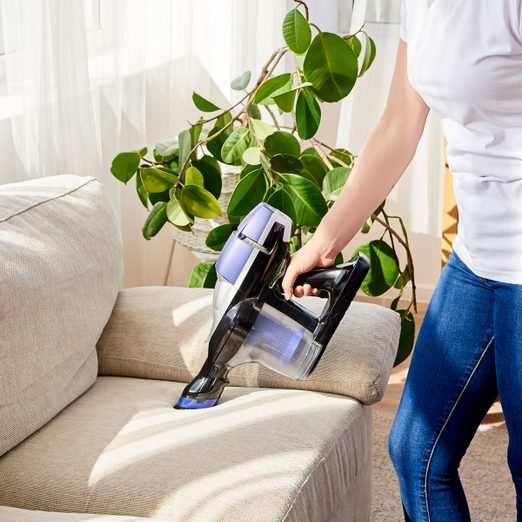
Baseboards, architraves, window frames and trims are usually painted in gloss that can be ruined by dirt and dust. Use a vacuum nozzle to get them spotless before painting.
Choose the best type of paint for the surface and the space.
No one’s said anything yet! Log in or create an account to be the first.