











closeX
Log In
  1. Remember me on this computer

Forgot your password?

NOT A MEMBER YET?
Join us (it’s free!) and you’ll get instant access to our friendly community of decorators and DIYers like you.

Member benefits:

  • Comment on projects and slideshows
  • Sign up for free DIY newsletters
  • Coming soon: Save and organize your favorite projects
  • And more!
Join Us Today

1. Gather Far and Wide

To be creative with a bouquet, start by being creative with where you get your flowers. Florists are just one place—quality will be great, but prices will be high. Grocery stores also have by-the-stem flowers for sale, as do many farmers' markets. Look for bouquet elements in your backyard as well: viburnum, cherry tree branches, forsythia, border flowers.

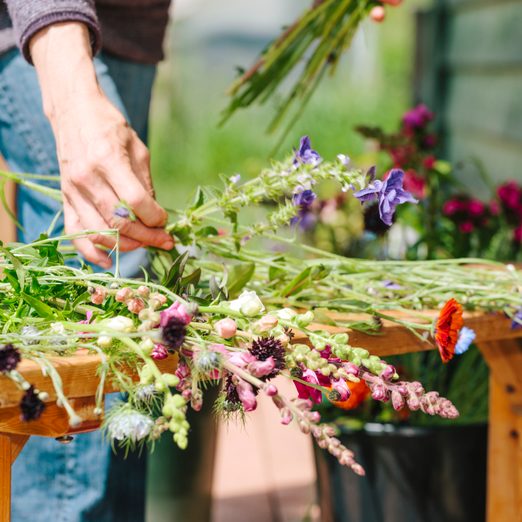
Wildflower BouquetJennifer Cheung/Botanica[+]

TIP

In the summer, try farmers' markets for offbeat bouquet ideas. As you roam the stands, look for colorful vegetables, which make wonderful centerpieces. And the best part? When you've grown tired of them, just chop them up and toss them into a quick stir fry or salad!

2. Think Greenery, Too

Greenery and branches aren't merely fillers to a bouquet. They add textures, variations, surprise and balance to brightly colored flowers. Think ferns, ivy, tree and shrub branches, and ornamental grasses. If the flowers you bought didn't come with greenery, and your backyard doesn't supply what you need, purchase an inexpensive pot of ivy to clip.

3. Snip and Bathe

Wherever your floral material comes from, it will last longer in arrangements if you snip the ends of the stems diagonally as soon as you get them indoors. Now here's the real secret: Give them a bath. Plunge greens and flower stems up to their necks into a bucket or sink full of cool water. This allows further water absorption. Try to give them all a half-day soak, if you have time. If you're rushed, just soak as long as possible.

TIP

If you have a citrus soda like Sprite on hand, you can keep your cut flowers fresher, longer. According to Scientific American, slightly acidic water makes its way up the cut stem to the flower faster than neutral water, and the sugar in the soft drink helps to feed it. But sugar and water can also foster bacterial growth. What to do? Add one drop of bleach to the mixture, to kill the bacteria and keep the flowers happy. Strange, but true.

4. Give Yourself Space to Create

Ready to start creating your bouquet? Clear off a big table, spread newspaper and lay your soaking wet flowers and greenery. Separate the flowers into fluffy material, straight stems and greenery.

5. Start With What's Fluffy

It is easiest to begin arranging with fluffy flowers like baby's breath, Sweet Williams, asters and multiflora garden roses. Cut the stems again, and place material in your container so that it creates an airy, mounded nest around the opening.

6. Then, Add Straight Stems

Next, add straighter stems such as chrysanthemums, Star Gazer lilies, daisies and Peruvian lilies so that the fluffy nest actually holds the taller flowers steady. Cut the straight stems so that the taller flowers hover gracefully close to the fluffy nest. The aim is to have the arrangement about equal in height to the container's height.

Multi-colored BouquetVictoria Pearson/Getty Images[+]

7. Add Greenery

Separate flowers and fill in the fluffy nest and the taller stems with different textured greens. When you finish adding everything, stick your spread-out fingers into the arrangement and lift the flowers up a bit. This will make your bouquet less stiff.

Multi-colored Bouquet 2Victoria Pearson/Getty Images[+]

8. Think Outside the Crystal Vase

Mason jars, old teapots, wine bottles can all house bouquets. Be as creative with the container as you are with its contents.

Flowers on a TableLisa Romerein/Getty Images[+]

9. Consider a Single Dominant Bloom

Best known are protea, those amazingly large, colorful, deeply textured tropical flowers. One protea, surrounded by contrasting flowers and greenery, makes a powerful package.

10. Go for Color Contrasts

One approach is a mix of flower colors against more neutral greenery and branches. Be bold—mix oranges with purples; whites with fiery reds. Another approach: Keep your flowers in the same color family, and use greenery to create contrast. Purple blooms against pale green and silvery greenery is beautiful.

Color ContrastsGetty Images[+]

11. Be Odd

That is, use odd numbers of flowers. For some reason, the eye is more comfortable looking at groupings of three or five rather than two, four, or six.

Tell Us What You Think

No one’s said anything yet! Log in or create an account to be the first.

closeX

Add a Comment For:

How to Create Flower Arrangements

Here’s what I think:
closeX

Add a Reply For:

How to Create Flower Arrangements

Here’s what I think:

You Might Also Like

More
Hello Stranger!   Log in or Join us
Advertise with us Advertisement
Family Handyman