











Forgot your password?
Member benefits:
Intro
Step 1: Mark Up the Half-Lap Joints
Step 2: Remove the Waste
Step 3: Secure the Joints
Step 4: Join the Frames
Step 5: Square the Edges
Step 6: Fit the Edging
Step 7: Secure the Mirror
Produced by Darryl Chapman
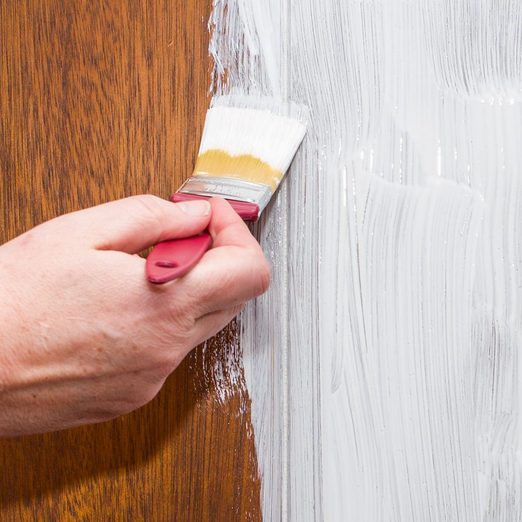
Salvaging molding and decorative trim from a reno project is a good way to recycle. Gently removing the layers of paint can reveal the scars and patina that tell the history of the home.
The moldings used for this mirror frame are from a 100-year-old house. To recycle old wood, use a lead testing kit to check for lead-based paint before smoothing or scraping it off. If the paint tests positive, leave it undisturbed and just clean then repaint it.
From the ends of the base frame pieces use a try square to mark the 3 1/2-in. width of the timber and half the base frame thickness, which is 3/8-in., on the sides.
Use a sliding compound miter saw with the blade depth set at 3/8-in. to make a series of parallel cuts across the joint. Use a sharp chisel to clean out the waste.
Apply wood glue generously to the faces of each joint then clamp, checking the frame for square.
Position the top frame pieces on the base frame with the outside edges flush, apply adhesive and clamp, securing with #8 x 1 1/4-in. wood screws through the base frame.
Clamp the frame across a pair of sawhorses, check the heads of the screws in the mitered corners are well below the surface and use a power planer to square up the outside edges.
To prepare the edging use a table saw to rip recycled molding to 2-in. Cut the edging to length with 45° miters then secure to the frame using adhesive and 6d galvanized finish nails.
Remove paint from the top frame using steel wool; then, seal with two coats of clear shellac and beeswax polish. Apply mirror and glass silicone inside the rebate, position the mirror and the backing then secure with skewed glass retainer clips.