




Forgot your password?
Member benefits:
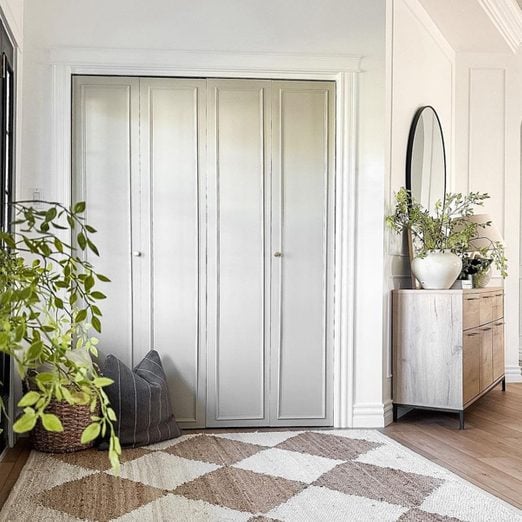
This cabinet is designed to blend right in, but open it and voilà—you have loads of storage space for dinnerware, books, CDs and more.
Before You Start
Step 1: Cut Out the Parts
Step 2: Attach the Shelves
Step 3: Install the Braces
Step 4: Attach the Door Hinges
Step 5: Cut a Notch for Baseboard
Step 6: Secure Cabinets
Step 7: Attach Cabinets to the Wall
Finishing Touches
Measure your ceiling height and adjust the heights of the cabinets so the two cabinets, when stacked, will be 1 in. shorter than the room is tall. You'll use molding to fill the gap between cabinet top and ceiling. If your ceiling height is less than 8 ft., you can save time and material by building a single tall cabinet and installing two doors.
Mark the positions of the shelves on the side panels. Use a scrap piece of MDF as a guide to draw the shelf widths. Predrill three holes at the center of each shelf position.
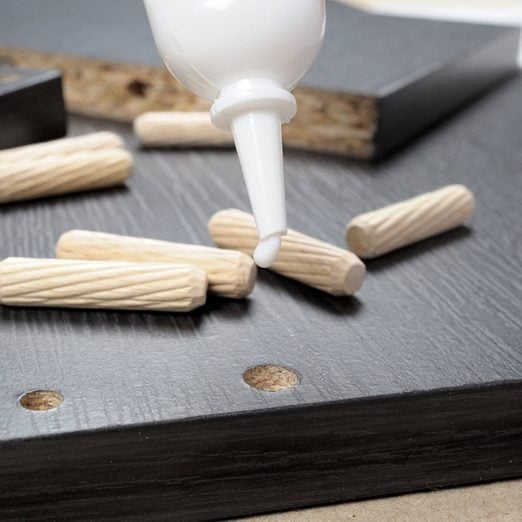
Use clamps or a helper to hold the shelves upright, then drive screws through the sides into the edges of the shelves. Use wood glue to create a stronger bond.
Apply glue to the ends and one edge of each brace, position them as shown in the photo and illustration, then fasten them in place using MDF screws. Install the toe kick on the lower cabinet. Paint the cabinets and doors with one coat of primer and two coats of high gloss paint.
Mark the positions of the hinges on the cabinets and the doors. Screw the mounting plates to the cabinets. Drill 35-mm holes in the doors, then insert the hinges in the holes and screw them in place. Click the door hinges into the mounting plates to install the doors.
Use a jigsaw with a fine-tooth blade to cut notches in the base cabinet to accommodate any existing baseboard on the wall.
Position the lower cabinet, then set the upper cabinet in place. Drive four 1-in. screws through the bottom of the upper cabinet into the top of the lower cabinet.
Drive nails, screws or wall anchors through cabinet braces to secure the cabinets to the wall.